Yoga Poses for Menopause Relief: A Comprehensive Guide

Yoga can help with sleep, stress and joint stiffness during menopause. In trials with menopausal women, regular practice improved sleep quality, mood and stiffness. It did not reduce the number of hot flashes, and it does not build bone the way weight-bearing and resistance exercise do.

Poses by symptom15-minute evening sequence

Medically reviewed by Dr. Ashley Alexis, ND,
Updated

What yoga can and can't do in menopause

Yoga can help with sleep, stress and joint stiffness during menopause.

SymptomWhat the evidence shows
SleepImproved in most trials; the best-supported benefit
Stress, anxiety, low moodImproved; comparable to other regular exercise, with an extra benefit from the breathing and attention component
Stiffness, back and hip painImproved with regular practice
Balance and fall riskImproved, which matters as bone thins
Hot flashes and night sweatsNo reduction in frequency in randomised trials; distress often lower, likely via sleep and anxiety
Bone densityNot reliably improved; yoga is low impact. Impact and resistance training build bone
WeightSmall effect at most; diet and strength training do more, see our macros guide
Vaginal dryness, urinary symptomsPelvic-floor awareness helps bladder control; dryness needs local estrogen or moisturisers

The poses, by symptom

For each pose, use the suggested modification if it causes pain. Hold the restorative poses for 2–5 minutes and the standing ones for 5–8 breaths each side.

For sleep and night-time waking

1. Legs-Up-the-Wall (Viparita Karani)

Why: raising the legs and opening the chest may help you relax after a night sweat.

How: sit sideways against a wall, swing your legs up and lie back so your sitting bones are near the wall. Arms out, palms up. Stay 5 minutes.

Change: bend the knees or move the hips a few inches from the wall if your hamstrings hurt; skip if you have uncontrolled high blood pressure or glaucoma.

2. Reclined Bound Angle (Supta Baddha Konasana)

Why: opens the hips and chest without effort.

How: lie on your back, soles of the feet together, knees falling apart. Put a cushion under each knee.

Change: use a bolster or two pillows under the spine for a gentle chest opening.

For anxiety and a racing mind

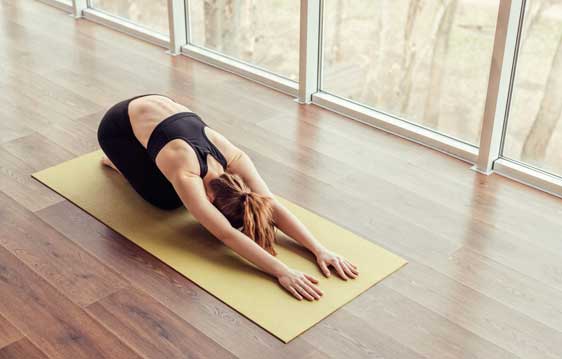
3. Child's Pose (Balasana)

Why: folding forward with the forehead down can support slow breathing during a hot flash or a wave of anxiety.

How: kneel, sit back on your heels, knees a little apart, and fold forward with your arms stretched ahead or beside you, forehead on the mat or a block.

Change: use a cushion between heels and hips if your knees hurt; use a bolster under the torso if folding all the way is too much.

A woman resting in child's pose

4. Slow breathing

Why: breathing at about six breaths a minute, longer out than in, may help during a hot flash and is part of CBT programs that work.

How: sitting or lying, inhale for a count of four, exhale for six, for five minutes. Practise when calm so it's available when you're not.

For stiff hips and lower back

5. Cat-Cow

Why: estrogen loss stiffens connective tissue, and the lower back is where most women feel it first in the morning. Gentle spinal movement restores range without loading the spine.

How: on hands and knees, inhale and let the belly drop while the chest lifts; exhale and round the back, tucking the chin. Ten slow rounds.

Change: on forearms if the wrists hurt.

6. Bridge Pose (Setu Bandha Sarvangasana)

Why: strengthens the glutes and back, supports the lower back and hips, and opens the front of the hips.

How: lie on your back, knees bent, feet flat and hip-width. Press the feet down and lift the hips. Hold five breaths, lower slowly. Repeat three times.

Change: a block under the sacrum for a restorative version that you can hold for minutes.

For bladder control and the pelvic floor

7. Squat (Malasana), supported

Why: a deep, supported squat lengthens the pelvic floor and helps you distinguish gripping from releasing it, which supports bladder control.

How: stand with feet wider than the hips, toes out, and lower into a squat with the heels on a folded blanket if they lift. Hands together at the chest, elbows pressing the knees out. Breathe into the floor of the pelvis.

Change: sit on a block or hold a doorframe. Pair it with pelvic-floor exercises; see vaginal dryness and pelvic symptoms for what yoga can't fix.

For strength and balance

8. Tree Pose (Vrksasana)

Why: bone loss accelerates after menopause, so balance practice may help reduce fall risk. Standing poses also load the hip and leg bones a little.

How: stand on one leg, place the other foot on the inner calf or thigh (never on the knee), hands at the chest or overhead. Five to eight breaths, then switch.

Change: use your fingertips on a wall. Add Warrior II and chair pose for more leg strength.

A 15-minute evening sequence

Most nights, an hour before bed, lights low:

  1. 1Cat-Cow2 minutes
  2. 2Child's Pose with slow breathing3 minutes
  3. 3Supported Bridge2 minutes
  4. 4Reclined Bound Angle3 minutes
  5. 5Legs-Up-the-Wall5 minutes

Done consistently, this may help sleep more than one long class a week. Add a standing practice of 30–60 minutes two or three times a week, hatha or gentle vinyasa, for strength and balance.

Precautions after 45

If you have a medical condition or haven't exercised in a while, a word with your clinician before starting is sensible. It rarely means "don't", just "like this".

Where yoga fits in a treatment plan

Yoga is not a treatment for hormone deficiency.

If hot flashes, night sweats, dryness or mood are affecting your life, medical options may work faster or better for some symptoms.

Golden Leaf Health's care team can go through those options with you by video; book a first visit if you'd like to.

Questions, answered plainly.

Does yoga help with menopause?

Yes. Trials in menopausal women show improvement in sleep, stress, mood and stiffness. It does not reduce the number of hot flashes in those trials, and it is not enough on its own to protect bone. Use it for how you feel and move, not as a treatment for hormone changes.

Can yoga reduce hot flashes?

Trials have not shown that yoga reduces how often hot flashes happen. Women who practise regularly often say flashes bother them less, probably because they sleep better and are less anxious, and slow breathing helps during a flash. Hot yoga can make flashes worse.

What type of yoga is best for menopause?

Gentle, restorative or yin yoga in the evening may help sleep and anxiety. A moderate standing practice such as hatha two or three times a week supports strength and balance. Avoid hot yoga if you have hot flashes, and avoid deep forward folds if you have osteoporosis.

How often should I do yoga in menopause?

Most trials used two or three sessions a week of about an hour, plus short home practice. A 15-minute evening routine most nights may help sleep more than one long class a week.

Is yoga safe with osteoporosis?

Generally yes with adjustments. Avoid loaded forward bends, extreme twists and anything that rounds the spine under weight. Favour standing poses, gentle backbends and balance work, and tell your teacher.

Sources: National Institute on Aging, Hot flashes; The Menopause Society, 2023 nonhormone therapy position statement; Mayo Clinic, Yoga: fight stress and find serenity.

This is general information, not medical advice. Talk with your provider about your health and treatment options.